
1. What Is a Customer Journey Map
A customer journey map is a visual representation of the steps a customer takes when interacting with your business. It shows actions, emotions, pain points, and motivations across multiple touchpoints.
Journey maps help teams see the experience through the customer’s eyes instead of internal assumptions.
2. Why Customer Journey Mapping Matters
Journey mapping creates clarity. It helps you:
- Identify friction points in the user experience
- Improve messaging and content timing
- Align marketing, sales, and support teams
- Increase conversions and retention
Without a journey map, optimization efforts often stay disconnected.
3. Define Your Customer Persona
Start with one clear persona. Avoid trying to map everyone at once.
Include:
- Demographics
- Goals and motivations
- Challenges and objections
- Buying behavior
Your journey map should reflect a real person, not an abstract audience.
4. Identify the Stages of the Journey
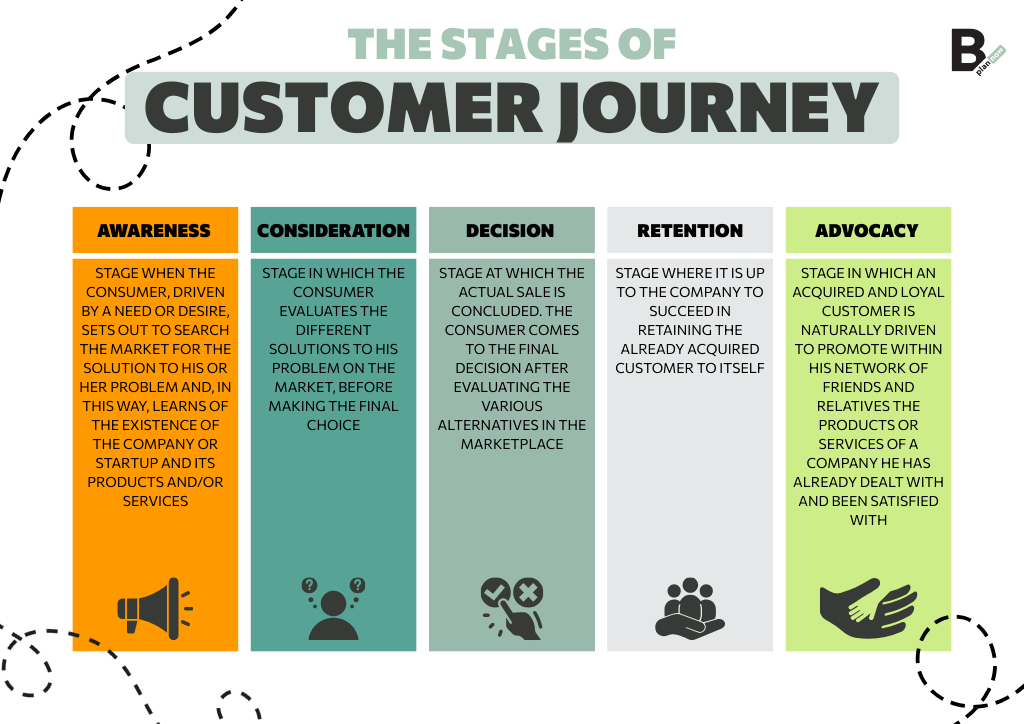
Most customer journeys follow five core stages:
- Awareness: The customer realizes they have a problem
- Consideration: They research options and compare solutions
- Decision: They choose a product or service
- Retention: They evaluate the experience after purchase
- Advocacy: They recommend or promote the brand
These stages may vary depending on your business model.
5. List All Customer Touchpoints
Touchpoints are every interaction a customer has with your brand.
Examples include:
- Search engines
- Social media posts
- Website pages
- Emails
- Ads
- Sales calls
- Support interactions
Mapping touchpoints shows where experiences connect or break down.
6. Capture Customer Actions, Thoughts, and Emotions
For each stage, document:
- What the customer does
- What they are thinking
- How they feel
This step uncovers emotional drivers like trust, confusion, excitement, or frustration.
7. Identify Pain Points and Barriers
Look for moments where customers hesitate, abandon, or disengage.
Common pain points include:
- Unclear messaging
- Slow website performance
- Complicated checkout flows
- Lack of trust signals
These are your highest-impact optimization opportunities.
8. Highlight Opportunities for Improvement
Turn insights into action.
Examples:
- Add educational content in the awareness stage
- Improve comparisons during consideration
- Simplify forms at the decision stage
- Strengthen onboarding after purchase
Each improvement should connect directly to a journey stage.
9. Visualize the Journey Map
You can build journey maps using:
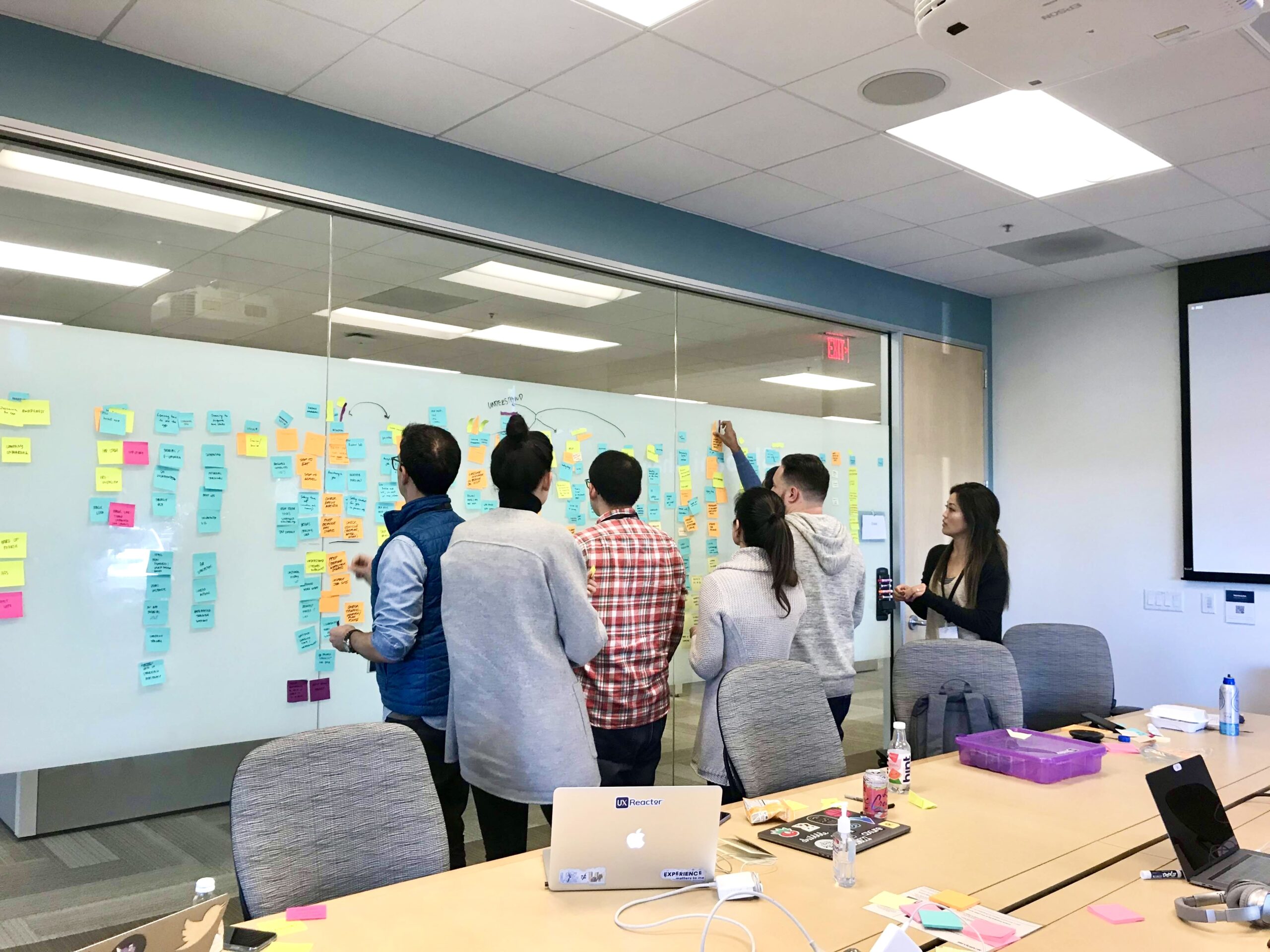
- Whiteboards or sticky notes
- Spreadsheets
- Design tools like Figma or Miro
- UX mapping templates
Clarity matters more than design polish. Keep it readable and collaborative.
10. Test, Update, and Iterate
Customer behavior changes. Your journey map should evolve too.
Review it when:
- Launching new products
- Updating your website
- Seeing changes in conversion rates
- Entering new markets
Journey mapping is an ongoing process, not a one-time task.
Conclusion
A customer journey map connects strategy to real human behavior. By understanding how customers experience your brand at every stage, you can design better content, smoother experiences, and stronger relationships. When teams align around the journey, marketing becomes clearer, UX improves, and growth becomes more intentional.